The wars being waged in Texas and Florida against “woke” — that is, against a full and objective understanding of American history, good and bad — clearly represent an effort by Republicans to white-wash the past and preserve the white patriarchy’s exceptional view of itself.
These efforts are underway throughout the country, most vigorously in the red states, the former states of the Confederacy where whites held bitterly to their racist and segregationist traditions for as long as they could. Now the goal is to revise history, wash away its ugly chapters and give public school students a sanitized view of the country’s development.
In Texas, there’s backlash against the hiring of a Black journalism professor because, when she worked at The New York Times, she researched the relationship between news media and race, notably in newsroom practices, the awarding of Pulitzers, and in obituaries and sports reporting. The reaction to her presence at Texas A&M is outrageous. You can read the disturbing facts in this Associated Press story.
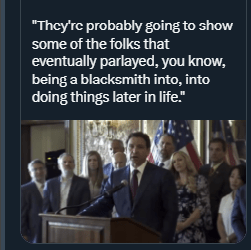
Meanwhile, in Florida, the DeSantisized African American history standards say that middle schoolers should be taught that “slaves developed skills which, in some instances, could be applied for their personal benefit.” And Gov. Ron DeSantis defended this by saying, “They’re probably going to show some of the folks that eventually parlayed, you know, being a blacksmith into, into doing things later in life.”
In other words, slavery wasn’t all that bad.
And here we were thinking that slavery was the country’s great shame, its original sin, deeply immoral and abhorrent.
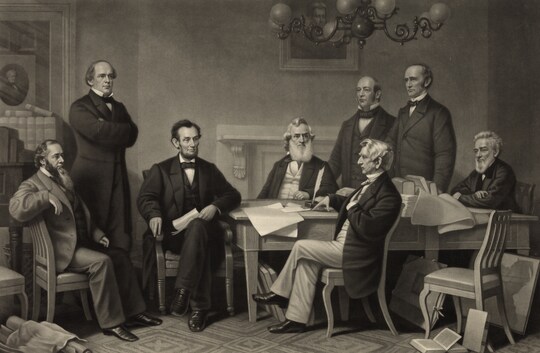
I invoke Abraham Lincoln here because he was a great man, not because I would expect any Trump-era Republican, like DeSantis, to respect his ageless wisdom.
For this we go back to the years following the publication of “Uncle Tom’s Cabin,” the anti-slavery novel by Harriet Beecher Stowe.
In Huntsville, Alabama, a Presbyterian minister, the Rev. Frederick Augustus Ross, published a widely circulated pamphlet in response to the Stowe novel. The pamphlet was entitled, “Slavery as Ordained of God.” Lincoln was among those who read it, and he found in Ross’s prose the argument that it was “better for some people to be slaves; and, in such cases, it is the will of God that they be such.”
I don’t doubt that this is the thinking of evangelical Republican revisionists in Florida and elsewhere who go to extremes in their efforts to counter the fuller telling of the American story.
Again, I offer Lincoln and his counter to Rev. Ross and others who stressed the “good” of slavery in the years just before the Civil War:
“We will suppose the Rev. Dr. Ross has a slave, and the question is, ‘Is it the Will of God that [his slave] shall remain a slave, or be set free?’ The Almighty gives no audible answer to the question, and his revelation, the Bible, gives none. No one thinks of asking [the slave’s] opinion on it.
“So at last it comes to this, that Dr. Ross is to decide the question; and while he considers it he sits in the shade, with gloves on his hands, and subsists on the bread that [his slave] is earning in the burning sun. If he decides that God wills [his slave] to continue a slave, he thereby retains his own comfortable position; but if he decides that God wills [his slave] to be free, he thereby has to walk out of the shade, throw off his gloves and delve for his own bread. …
“‘But, slavery is good for some people!’!! As a good thing, slavery is strikingly peculiar in that it is the only good thing which no man ever seeks the good of, for himself.
“Nonsense! Wolves devouring lambs, not because it is good for their own greedy maws, but because it is good for the lambs!”
Discover more from Dan Rodricks
Subscribe to get the latest posts sent to your email.

 Dan Rodricks