
Some years ago, my family went hiking through what’s known as the Grand
Canyon of Pennsylvania, Pine Creek Gorge, about 200 miles north of Baltimore. I
wanted to fish in Pine Creek and so I put on my waders, stepped into the stream
and walked over rocks until I was in water above my waist, about four feet deep.
Amazingly, I could still see my wading boots. The water quality was exquisite, a
paradise for trout.
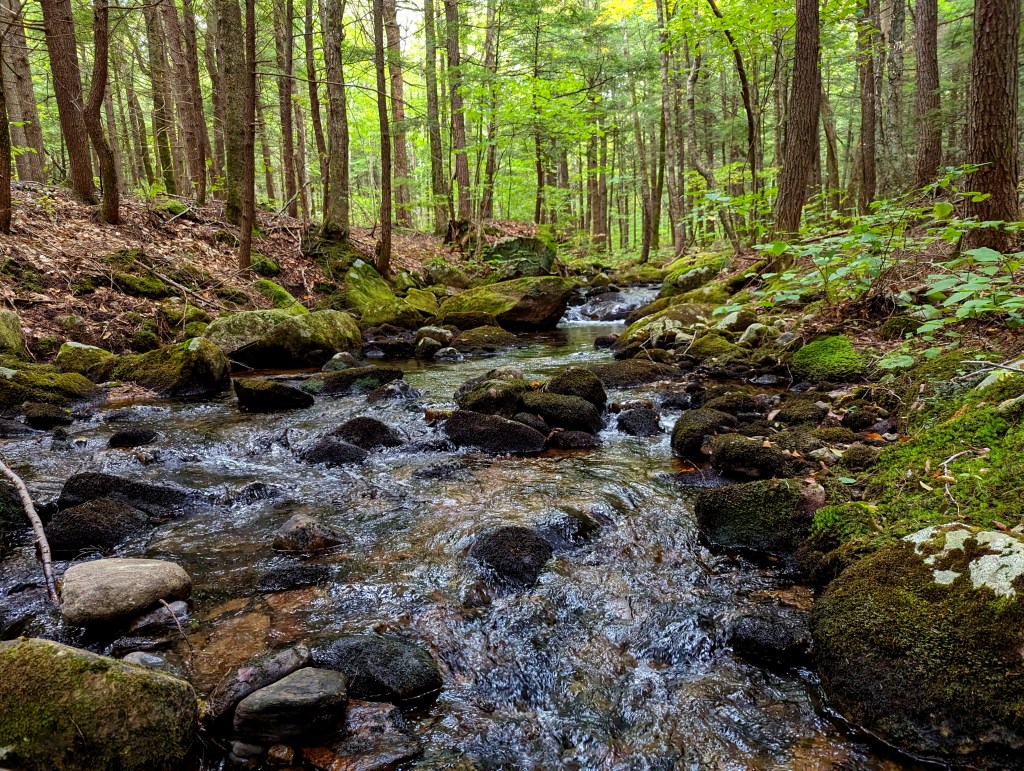
Where the Chesapeake begins, up in the mountain springs and licks that feed the creeks that feed the big rivers, the water ran clear and cold.
You could put your hand into a feeder spring in a cool, mossy place in the woods and feel the birth waters of the bay run cold and fresh over your hands. And then you could stand back, your head in the low-hanging hemlocks, and watch the water splash down through the damp, forested mountainside on its way to Pine Creek, deep in the gorge below, and from there more than 40 miles to the West Branch of the Susquehanna, and from there to the big river, which provides the Chesapeake with half of its fresh water.
Imagine this: One hundred years ago, a visitor to Pine Creek Gorge would
have found nothing but mud in his hands. By then, men had stripped the whole
range bare, sending the lumber to growing East Coast markets and to the
shipbuilders in Baltimore. The rivers were poisoned with tannery waste and mine
acid. The mountainous lands that today attract tourists were once known as the
Pennsylvania Desert.
It would have been hard to stand there and watch a mudslide in 1909 and
imagine that such a place could ever recover.
But some people did imagine it; they insisted on it. So there is a massive
swath of green in north-central Pennsylvania today, tens of thousands of acres
reforested, on the way back to its pre-industrial best.
Of course, leaving lands alone to become green again is easy compared to
Chesapeake recovery. A century ago, there were only about 3 million people living
in the watershed; there are 18 million today, and all of us have to eat, all of us flush
toilets and most of us still rely on energy from fossil fuels. The population is
expected to reach 20 million in the next decade. It’s hard to imagine the
Chesapeake getting better as the region becomes more congested.
But I remain an optimist. If the rest of us do our part and demand sustained
commitment to the Chesapeake by the politicians we elect and the businesses we
support, the bay might one day stop wheezing and coughing. I believe we can save
a resource and live in better balance with it.
When I go fishing in Pine Creek or in Father’s Day Creek, or wherever the
fly rod takes me, I try to look downstream and imagine the Chesapeake Bay in full
recovery: blue crabs plentiful and heavy, the waters safe for swimming, bay
grasses expanding, dead zones contracting, and my wading boots visible in four
feet of Baltimore Harbor.

Discover more from Dan Rodricks
Subscribe to get the latest posts sent to your email.

 Dan Rodricks
A very lovely commentary.
Jeffrey P. Ayres, Esq. | Venable LLP
ETHICS COMMITTEE CHAIR t 410.494.6282 | f 410.821.0147 | m 410.274.6633 210 W. Pennsylvania Avenue, Suite 500, Towson, MD 21204 he/him/his JPAyres@Venable.com | http://www.Venable.com
LikeLiked by 1 person
Danny— your visuals are beautiful!
And YES we all have to do our part!
We ALL are responsible for the beauty of our bays!
Extravagant — private planes, Yachts and over consumption is a regrettable behavior !
Thank you for helping us to be better caretakers of our waterways and our green spaces!
Grazie, Danny
LikeLike
Danny— your visuals are beautiful!
And YES we all have to do our part!
We ALL are responsible for the beauty of our bays!
Extravagant — private planes, Yachts and over consumption is a regrettable behavior !
Thank you for helping us to be better caretakers of our waterways and our green spaces!
Grazie, Danny
LikeLiked by 1 person