
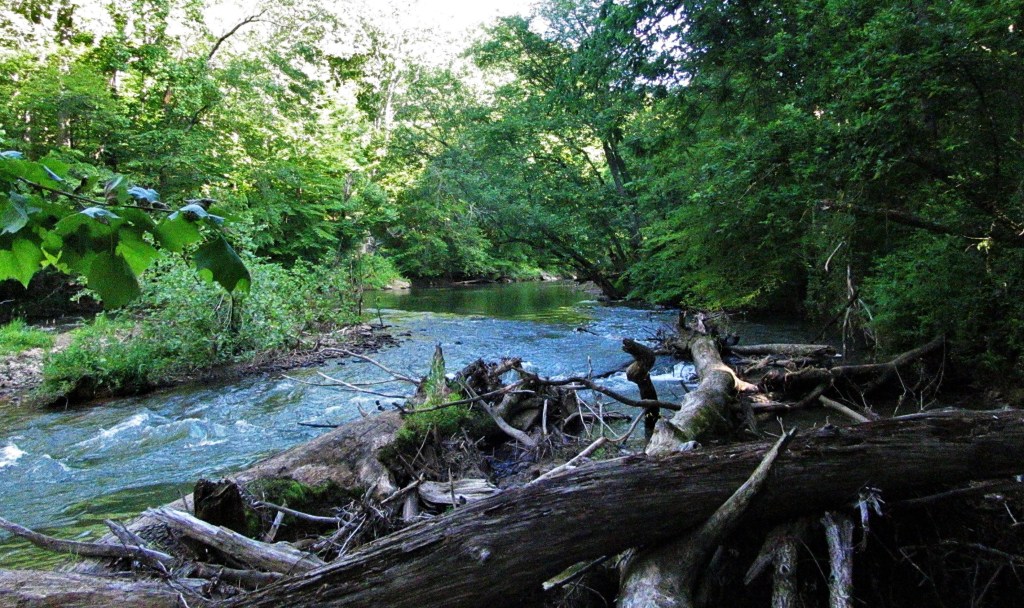
The skeleton of this 80-foot pine tree along the banks of the Youghiogheny River in western Maryland arrived at some point during the previous eight weeks. The last time I visited this spot, near the Yock’s confluence with Sang Run, it was not there. It was well upstream, half submerged. I assumed it would be in that place for a long time. Now it looks like it will be in this new spot, a kind of cove off the Yock’s mainstem, for even longer — inconveniently parked where anglers and dogs traditionally step into the river.
Nature makes no accommodation for humans. That’s not a complaint. Just a fact.
Everyone who hikes near rivers or fishes in them has had the experience of seeing deadfall along banks or in the middle of pools that had previously been clear of debris. Everyone has seen matted grasses a day or two after flood, when heavy rains or snowmelt brought a deluge. Big water is stunning and scary, and you don’t have to be there, during its most violent peak, to appreciate its power. Most of us arrive in its aftermath and regard with awe big water’s mangled, piled-up legacy.
At least that old pine tree came from the forest. It could have been a major appliance. I once saw a washing machine in a tree. It had been deposited there by big water. Someone’s junk had ended up in the Potomac — either thrown or washed into it — and during a flood it had been carried for who-knows-how-long until the appliance became lodged in a nook of a tree, a permanent reminder of how we’ve junked up so much of a natural world around us. I prefer a dead tree in my way any day.
Discover more from Dan Rodricks
Subscribe to get the latest posts sent to your email.

 Dan Rodricks
I loved this description of the power of the Youck. The debris deposited along the banks of the Susquehanna above the Conowingo Dam is a scary junkyard of human trash including heavy appliances.
LikeLiked by 1 person