

After discovering a Robert Frost poem from 1921, “On a Tree Fallen Across A Road,” it struck me that the poet probably never heard much about climate change. Respecting or fearing the tempest is as old as the human race. But nature forever altered and angered by an industrialized human race — what we call climate change — is something Frost, who died in 1963, never addressed in verse.
As a man who spent most of his life contemplating nature, extracting from it keen observations, Frost might have sensed doom ahead; in a 1923 poem, “Fire and Ice,” he considers how the world might end. But it seems logical to conclude that Frost never heard popular warnings about climate change.
For the record, the National Aeronautics and Space Administration reports that, in 1896, Swedish scientist Svante Arrhenius first predicted that changes in atmospheric carbon dioxide levels could substantially alter the surface temperature through the greenhouse effect. In 1938, Guy Callendar connected carbon dioxide increases in Earth’s atmosphere to global warming.
It was another 60 years before Al Gore started spreading the “inconvenient truth” about how Earth’s atmosphere, forever altered by human behavior, could profoundly and negatively affect life across the planet.
In the poem I mention — you can read it in its entirety in just a moment — Frost addresses two things: The power Nature has over us and our determination not to let it stop us.
On A Tree Fallen Across The Road
(To hear us talk)
The tree the tempest with a crash of wood
Throws down in front of us is not bar
Our passage to our journey’s end for good,
But just to ask us who we think we are
Insisting always on our own way so.
She likes to halt us in our runner tracks,
And make us get down in a foot of snow
Debating what to do without an ax.
And yet she knows obstruction is in vain:
We will not be put off the final goal
We have it hidden in us to attain,
Not though we have to seize earth by the pole
And, tired of aimless circling in one place,
Steer straight off after something into space.
The fallen tree blocking our passage asks, “Who do you think you are? Where do you think you’re going?” For all of time, Nature has been slowing us down, pushing us back and scaring us to death. But Frost confidently sees resilience and resourcefulness in humans, thus “she knows obstruction is in vain.” Ultimately, Nasrullah Mambrol wrote in this 2021 analysis of the poem, the prevailing force is human will: “The poem is a reminder that we will not be restricted by nature’s force. Nature is met, contended with and circumvented. The larger meaning is that whatever causes havoc in our lives, we must go on.”
I appreciate the “larger meaning,” but I think that overstates what Frost meant to say. I think his line about steering “straight off after something into space” suggests that human’s have large ambitions and super powers.
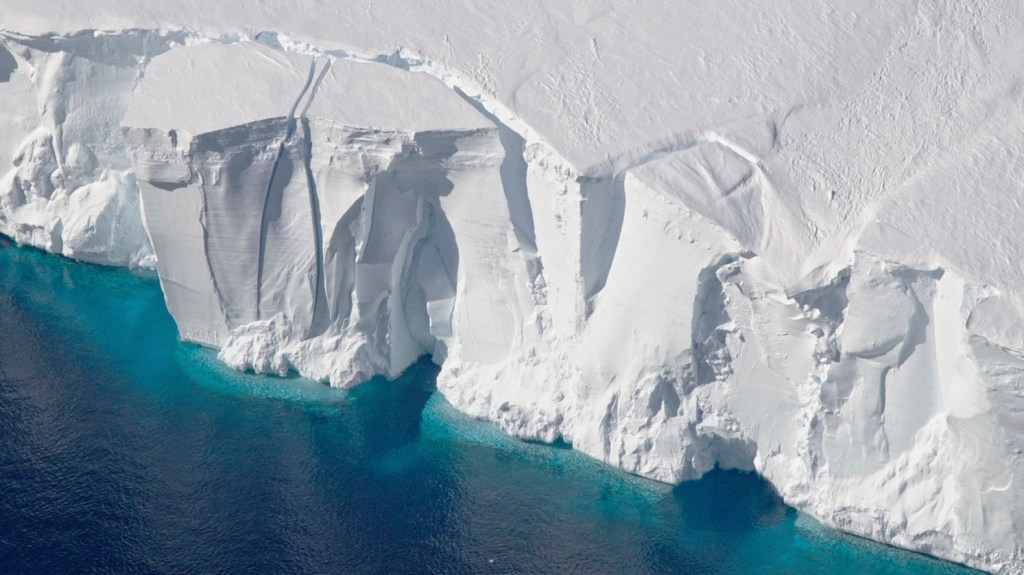
While I was glad to discover this Frost poem, as well as Mambrol’s analysis of it a century later, I find them both more quaint than profound. Indeed, as the climate clock clicks louder and louder — while Republicans continue to dismiss dire scientific warnings about its consequences for the U.S. and the world — the notion that we will “not be restricted by nature’s force” is ridiculous.
Discover more from Dan Rodricks
Subscribe to get the latest posts sent to your email.

 Dan Rodricks