
The last bill President John F. Kennedy signed into law was the Community Mental Health Act of 1963, also known as the Mental Retardation and Community Mental Health Centers Construction Act of 1963. The hope was that people who did not belong in psychiatric hospitals — asylums, essentially — could be mainstreamed, returned to their communities with mental health services provided there. Kennedy’s signature was considered a big step in the push for deinstitutionalization.
But within a decade, even less, it became clear that the push in the U.S. for community mental health had failed, leaving many former custodial patients homeless or in prison.
“In reality, though, few community mental-health centers were built, creating an extreme shortage of mental-health care,” writes Alisa Roth, author of Insane: America’s Criminal Treatment of Mental Illness. “Thorazine, initially touted as a miracle drug, soon proved to have serious side effects. More critical was the growing recognition that the treatment of mental illness is complicated: Conditions like bipolar disorder and schizophrenia cannot be ‘cured’ with a simple drug regimen the way an antibiotic can knock out an infection. And Medicaid, now the largest payer of mental-health-care services in the country, has severely limited the number of inpatients that hospitals and other facilities can serve. The dream of community-based care turned out to be largely a failure.”
But, as Roth points out in this long essay in The Atlantic, the history of deinstitutionalization is complicated.
I have always heard the simplified version as an explanation for the homelessness I have observed for five decades on the streets of Baltimore: People with mental health disabilities and even developmental disabilities, who earlier might have been wards of the state, were released from institutions with nowhere to go, nowhere to live. Many had long been abandoned by their families.
There is definitely truth in that, though, as Roth reports, the reality is more complicated.
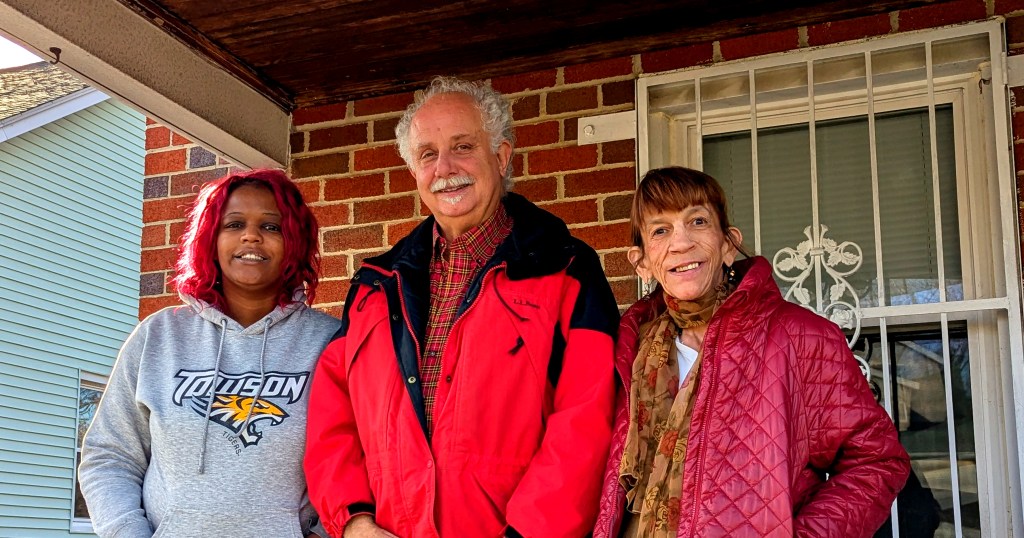
Still, I think this is why, having reported on Baltimore’s homeless mentally ill since the early 1980s, I am happy to profile Main Street Housing in my Sunday column of Dec. 8. Main Street Housing (MSH) works quietly in Baltimore and 11 Maryland counties to rent homes to people who’ve experienced mental health disabilities, to integrate them into neighborhoods across Maryland without a lot of fuss — and to let them choose the therapeutic services they need on their own. “We don’t have any mandatory services attached to our housing,” says Ken Wireman, the nonprofit’s executive director since its founding. “Importantly, this has been very successful as our tenants took on a real-life role of tenant, they kept up with the services they needed … .”
MSH has been able to purchase a few dozen homes from western Maryland to the Eastern Shore that, at capacity, can accommodate up to 114 tenants. It seems to me this model — treating people with disabilities as responsible adults, providing them a way to live in their communities — comes closest to fulfilling the dream envisioned when JFK signed that bill in 1963.
FREE READ: My Sunday column on Main Street Housing
Discover more from Dan Rodricks
Subscribe to get the latest posts sent to your email.

 Dan Rodricks
Excellent points. There was also a study conducted in the mid-1980s by U of Maryland researchers that found that after as little as 2-3 months the experience of homelessness – caused by poverty, not mental illness – was likely to produce physical ANd/OR mental illness.
LikeLiked by 1 person