
My hometown, East Bridgewater, Mass., celebrates the bicentennial of its incorporation this year, though the old Plymouth County settlement is much older than that. I was asked to write a remembrance of growing up there for a bicentennial book. I was given permission to post it here.

The East Bridgewater I knew — population about 8,500 in 1973 — provided all you could ask of a small town: A nurturing place for launching a life, made possible by a supporting cast of adults who genuinely cared about the next generation, and there was a sense of the big world beyond, if only from the sound of a train whistle.
The train stopped at night at the Woodward & Wright Last Company on West Union Street — they made wooden lasts, or forms, for shoes there — and I only knew this because, on the way to school the next morning, we walked across the tracks, and there would be burned-out road flares, piles of ash next to them, that workers had set out the night before. I cannot say I ever saw the train come through East Bridgewater. But I certainly heard and saw evidence of it, and the train whistle fostered wishful thinking about the future and the notion of moving on from a small town.
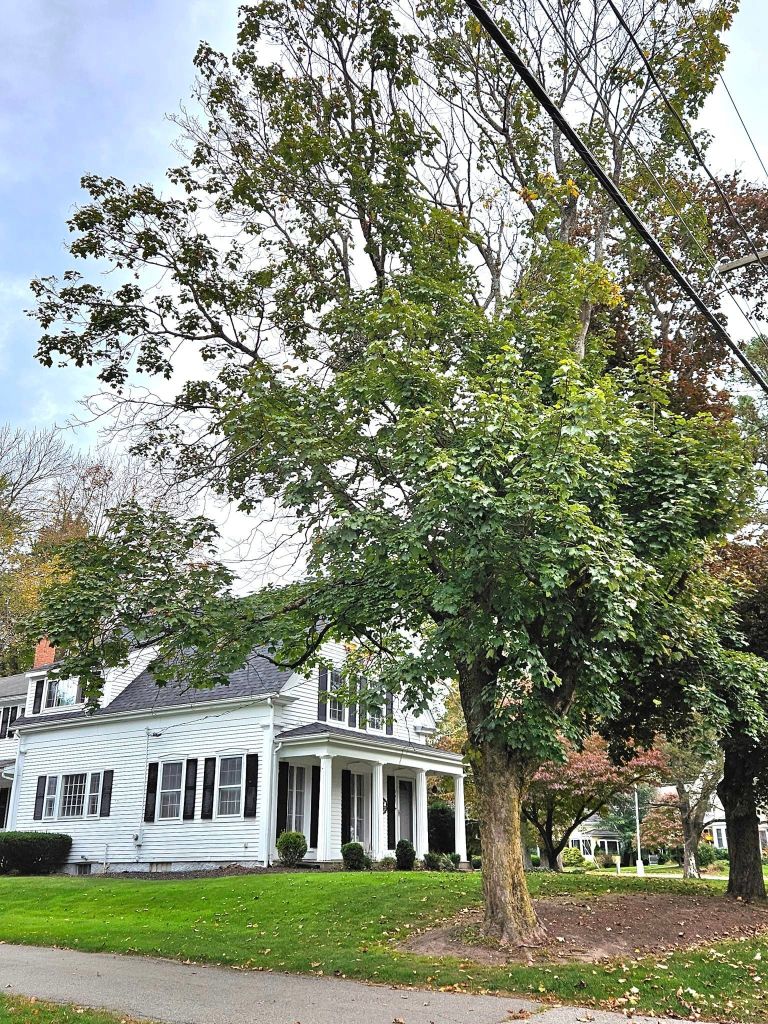
While many of my classmates decided to stay pretty much in one place their entire lives, others felt the tug of somewhere else. Some people plan all that, sketch it all out by senior year of high school. For others, it just happens — college or a job takes them away. Or maybe they fall in love and part of the deal involves settling somewhere else. Some people moved away from East Bridgewater in one damn hurry — a couple of my classmates were never heard from again after graduation night in 1972 — and others were not so sure about leaving their nurturing hometown.
But all of us who grew up in East Bridgewater took a piece of that small, simple and delightful place with us. Whether you went away in a hurry or eventually or never, there is a piece of the hometown in your bones.
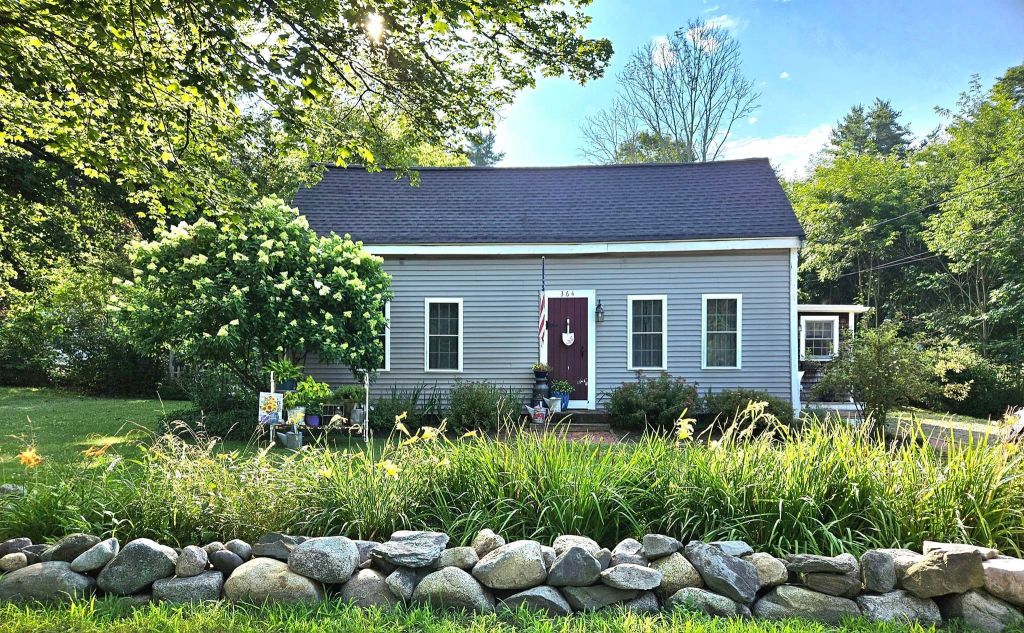
Looking back, a lot of it seems idyllic now — playing outside all day in summer until it was dark; inventing games in the backyard with other baby boomers; fishing at Forge Pond; walking “up town” to buy a popsicle at Gibby’s or the I.G.A. or Luddy’s; getting haircuts at one of three barbershops that had comic books and copies of Sports Illustrated while you waited; picking wild blueberries near the power plant; sledding Cinder Hill and skating on frozen Meadow Brook; riding my bike through woods and across fields, pretending I was Steve McQueen on a motorcycle in “The Great Escape,” and going to the old polo grounds for the Fourth of July bonfire. One year, during the Cold War, when John F. Kennedy was president, the Commercial Club capped the town’s annual 40-foot bonfire with an outhouse, and inside, seated on a commode, his red commie necktie flapping in the soft summer breeze, was an effigy of Soviet premier Nikita Khrushchev.
We played Little League games on the polo grounds and, at the time, there was no Mercy Rule to bring a game to an early conclusion when one team had a large and presumably insurmountable lead. The adults must have thought a good lickin’ was just part of life, just what we needed, a rite of passage for eight-year-old boys. So the games would go on and on, 15-0, 26-2, 36-3. I played for the Woodard & Wright Last Co. While we appreciated the team sponsorship, we found ourselves at a distinct psychological disadvantage, having the word “Last” sewn into our gray-and-maroon jerseys. Last was where we ended up that first season.
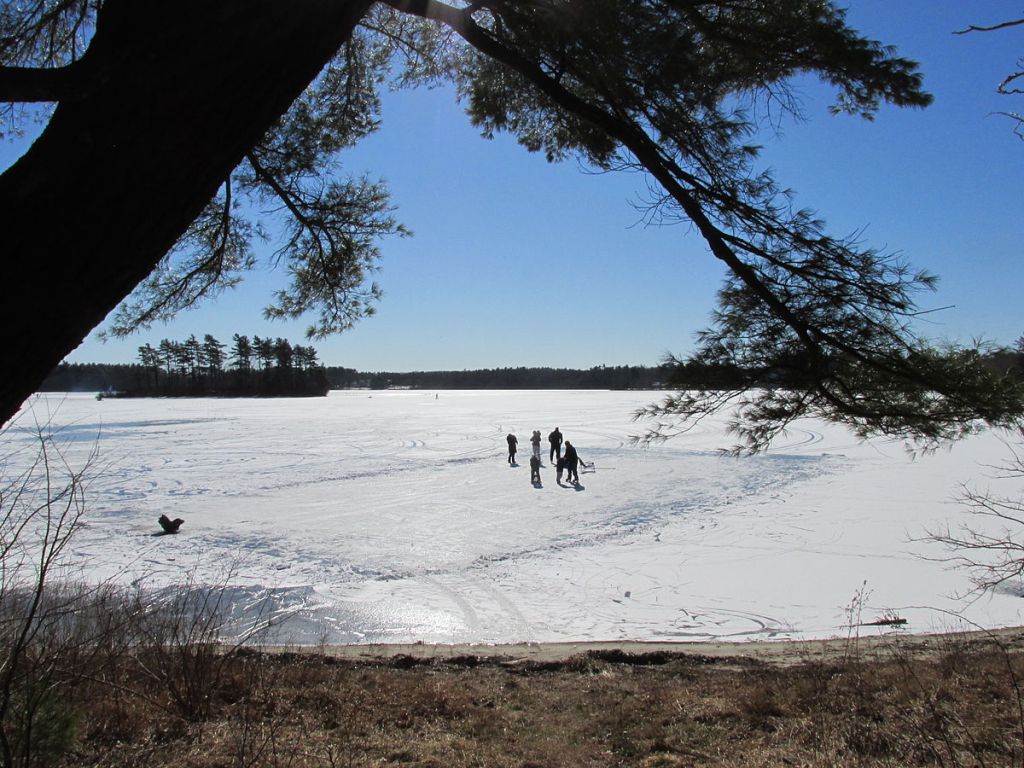
Spring smelled of fresh rain and lilacs. Summer brought the aroma of fresh-cut grass, the hay at Leland Farm and, when the wind was right, the Thatcher Street piggery. The autumn scent was that of burning leaves. Winters were snowy, rainy and gray and, for long stretches, muddy and miserable. But it could also be cold enough long enough for the ponds to freeze. Plymouth County had an average annual snowfall of 37 inches at the time, and it was not unusual to get a foot of snow overnight.
When I first moved to Baltimore, it was shocking to discover how people in Maryland responded to snow. The mere rumor sent Baltimoreans into a panic — and to the supermarket for milk, toilet paper, bread and cans of Hunt’s Manwich so they could make Sloppy Joes for three days. It was shocking because, when I was a kid, the people who broadcast the weather on radio and television in the Brockton-to-Boston area did not try to scare us, as the weathercasters seem to do now. Rather, they tried to keep us calm. Plus, in those days — and I like to tell people this because it makes me sound like a still-hardy New Englander — life mostly went on, we mostly went to school. And it was the short, stout man named Eddie Kenneally who saw that we did.
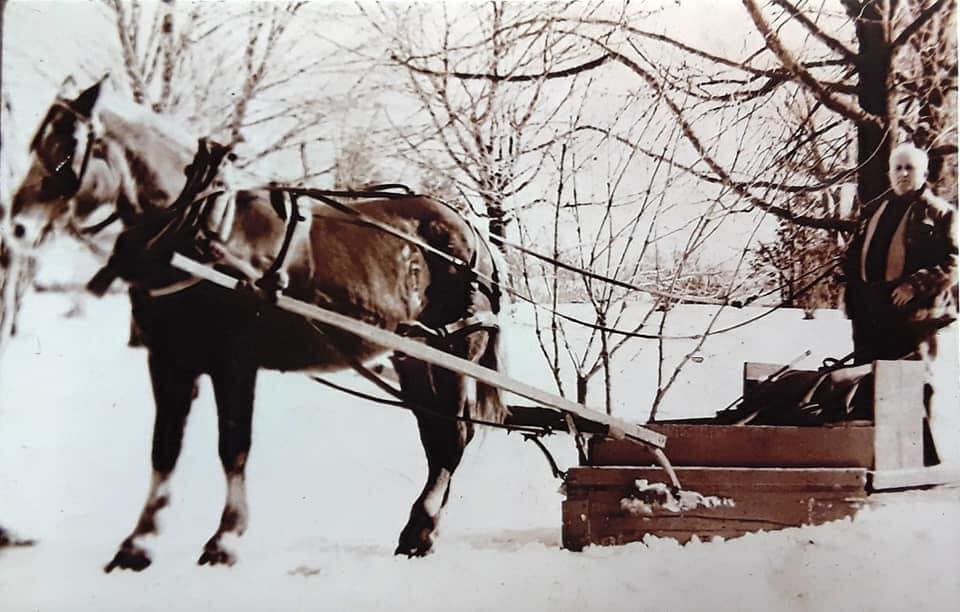
If there was snow overnight, you knew there was a chance school might be called off for the day. But if, by 6 o’clock the next morning, you heard a cowbell out front, if you heard a man barking, “H’yar,” and, if you could feel the thud of big horse hooves, strong and heavy through the snow, you knew you were going to have classes that day. To confirm it, you leaned over a hissing radiator to rub the frost off a window so you could see Eddie Kenneally driving his huge draft horse on a sidewalk plow, a Dalmatian scampering alongside him in the snow.
As much as we appreciated a day off now and then, school was really the central part of the East Bridgewater experience — where you made friends, and where I had the good fortune of having some great, committed teachers and administrators. All these years later, when I take account of people who had the most influence on me — who took an interest in me, supported me, coached me, mentored me — six of the Top Ten were teachers in the East Bridgewater public schools.

Spring meant the long-last end of mud time, Little League parades and the high school musical, eating dandelion salad, trying to catch herring in a herring run with our bare hands and failing every time, ice-out at Forge Pond and fishing for hornpout.
The summer meant trips to the beach; endless backyard baseball games, with a stand of tall ash trees serving as our Green Monster; band concerts on the town common and the wonderfully strange art installments commissioned for the common by an eccentric Unitarian minister, the Rev. John Paul Rich. The minister was opposed to the Vietnam War, which was raging at the time, and he got into a dispute with the local American Legion post over the use of rifles for the traditional 21-gun salute on Memorial Day. Rich claimed his church owned the common and he posted a sign forbidding firearms. His anti-war ministry and his establishment of an artistic community made his church both popular and controversial. It was one of the most fascinating things that happened during my boyhood in East Bridgewater.

I also associate summers with the death of Marine Cpl. Peter Moskos, killed in Vietnam, in July 1967. He was the son of the town’s police chief. I knew his younger brothers. I was an altar boy at St. John’s Church for the Moskos funeral. His death marked the moment that the Vietnam War, remote and still obscure, became crystal clear to everyone in East Bridgewater.
Fifteen years later, I was a columnist for the Baltimore Sun and a weekly feature reporter for WBAL-TV, assigned to cover the dedication of the Vietnam Veterans Memorial in Washington. One of the most profound experiences of my life occurred when I took a moment to find Peter Moskos’ name in the polished black granite of the memorial wall — Panel 23E, Row 29 — and it was the only time I ever wept as I tried to do my work. I remember, near midnight at the Sun, longing for the comfort of my hometown. I even dialed the Commercial Club to see if anyone would pick up in the hopes of hearing a familiar voice.
Garrison Keillor spent decades telling stories he made up about a fictional Minnesota town called Lake Wobegon. And I understood the need for imagination in that toil because it’s hard to sustain story-telling about one place for 30 years. But the legend on my license says journalist, so I don’t get to make stuff up. And so I can confidently say this about East Bridgewater: You don’t have to make it up. Everything I’ve mentioned is real in my memory.
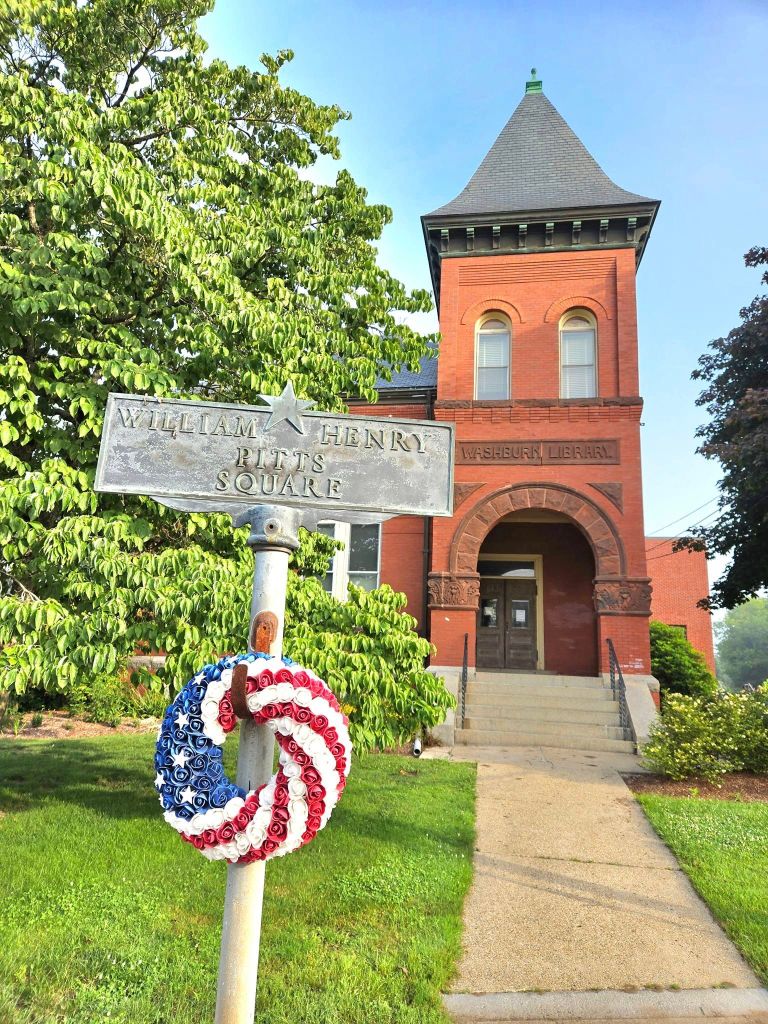
We’ve heard it said many times: You can’t go home again, an expression that gained popularity with the publication of the Thomas Wolfe novel of that title. Its full meaning stands somewhere between the idea that the farther you get away from a place, both in time and distance, the better it looks, and the idea that it’s painful to face the truth about change in places we believe to be eternal. As I came to East Bridgewater for visits over the years, there were things that saddened me; simple things, things that changed, that I wanted to always stay as I had remembered them. Friends, classmates and relatives died — my father, my mother and my younger brother — and there’s the realization, as time goes by, that many things can never be as good as the first time you experienced them. “Nothing gold can stay,” Robert Frost wrote. But we are each blessed with both the gift and the torment of memory for things grand, things small, things happy and inspiring, things sad and discouraging, things ordinary and extraordinary — and all of it gets into our bones and becomes part of us, no matter where we end up. I think of Humphrey Bogart’s Rick in “Casablanca,” telling Ingrid Bergman’s Ilsa, “We’ll always have Paris.” We might move on, we might land elsewhere, but we’ll always have East Bridgewater.
Discover more from Dan Rodricks
Subscribe to get the latest posts sent to your email.

 Dan Rodricks
Lovely piece, Dan. Thank you.
LikeLiked by 1 person
Dan, Beautiful piece, beautiful remembrance filled with tenderness for your hometown. How nice you were asked to write for the bicentennial book. Keep sharing the gifts God’s given you. Be well, Marianna
>
LikeLiked by 1 person
Thank you for posting this. I grew up in Springfield, MA, graduating from Cathedral High School in 1970. Many of your memories resonate deeply with me — even though I have never been to your hometown.
Jeffrey P. Ayres ETHICS COMMITTEE CHAIR t 410.494.6282 | f 410.821.0147 m 410.274.6633 VENABLE LLP 210 W. Pennsylvania Avenue, Suite 500, Towson, MD 21204 he/him/his JPAyres@Venable.com | http://www.Venable.com ___________________ ________________________________
LikeLiked by 1 person
Outstanding Dan. You are an amazing man.
LL
<
div>
Sent from my iPhone
<
div dir=”ltr”>
<
blockquote type=”cite”>
LikeLiked by 1 person
Great stuff. Every reader who grew up in a small town (or distinctive neighborhood) will smile with pleasure as his memory connects with some part (or many) of what you wrote.
LikeLiked by 1 person
Great article Dan. You certainly nailed it. We really did have a wonderful time growing up in EB during a much more simpler and safer time. Keep up the great work.
LikeLiked by 1 person
Thank you, John. We should get beer and linguica pizza next time I’m home, probably Christmas.
LikeLike
Hi John, Mike Harrington here. We really did have it made in East Bridgewater. I wasn’t able to attend the last ’71 reunion, and regret it. This article really hit home. I hope all is well with you and yours. Mike. Sorry that I can’t vote for Joe…
LikeLiked by 1 person
Somewhere mom has names of Commercial Club families on cover. It was an annual picnic. Great job.
LikeLiked by 1 person
Wonderfully written and remembered Dan. Takes me back for certain!!
LikeLiked by 1 person