There are some old photographs, hanging in libraries and published in books, of the final days of giant trees that lived hundreds of years in the East before the pioneers and colonists arrived, before the farmers and lumberjacks, before the railroads and the highways — way back, in the words of Gordon Lightfoot, “when the green dark forest was too silent to be real.”
But we live in the modern world, long past the time of the ancient forests. It’s hard to imagine what the landscape looked like before the Europeans arrived. But every once in a while, you get a glimpse. During hikes in woods near rivers, I’ve come across a giant hemlock or massive sycamore, and I’ve been stunned — not only at the size of the tree but at its very existence, that neither man nor ice storm took it down. In Jack Wennerstrom’s fine book about the Upper Potomac region, he writes about sycamores and how, in George Washington’s time, some were so large in circumference and so hollowed out at the base that families could camp inside them. Washington, according to the Encyclopedia of West Virginia, recorded in his travels along the Ohio River a sycamore that was 61 feet in circumference at its base.
So it’s 2025, and we live in this very different, very crowded world of suburbs and cars and roads and shopping centers, and you just don’t expect to see giant trees. On the other hand, because they are so rare in the metropolitan landscape, the survivors jump out at you.
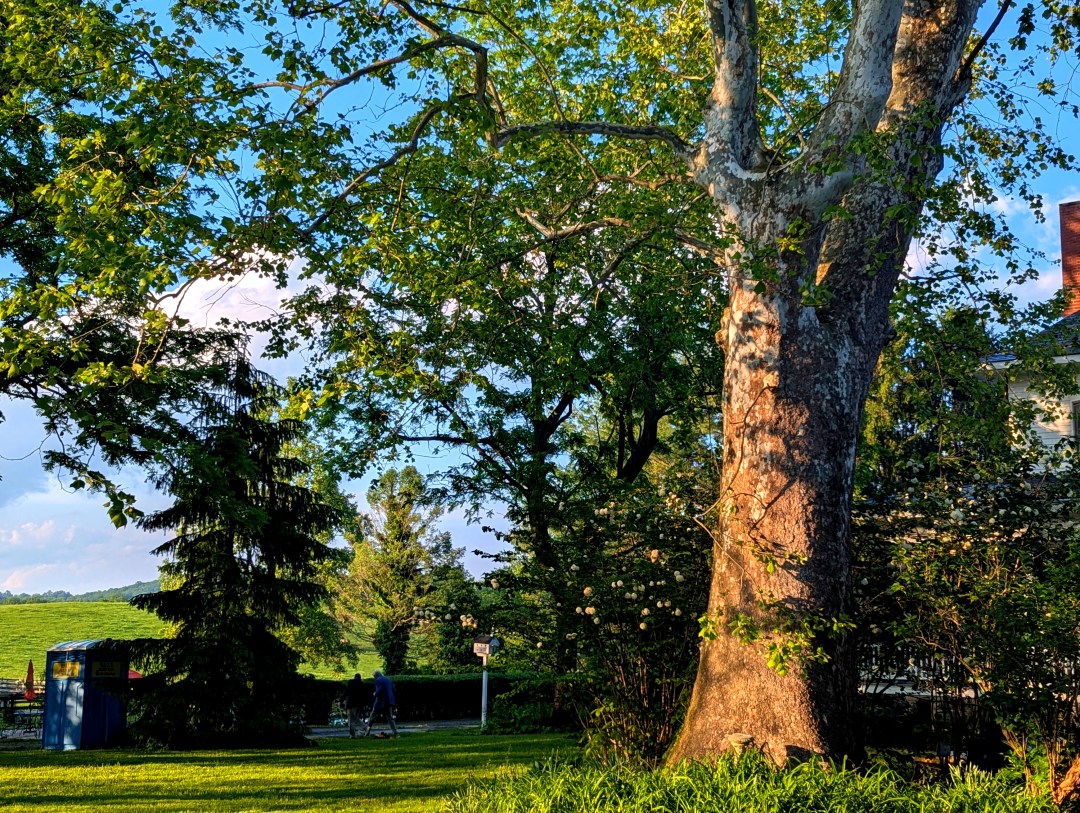
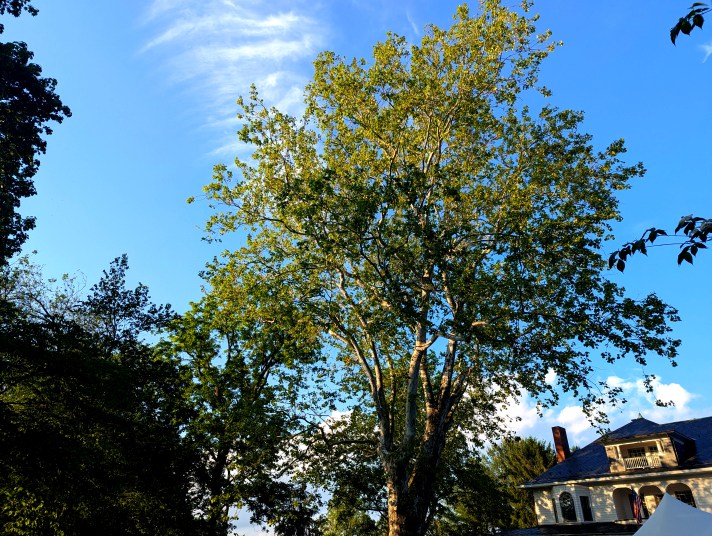
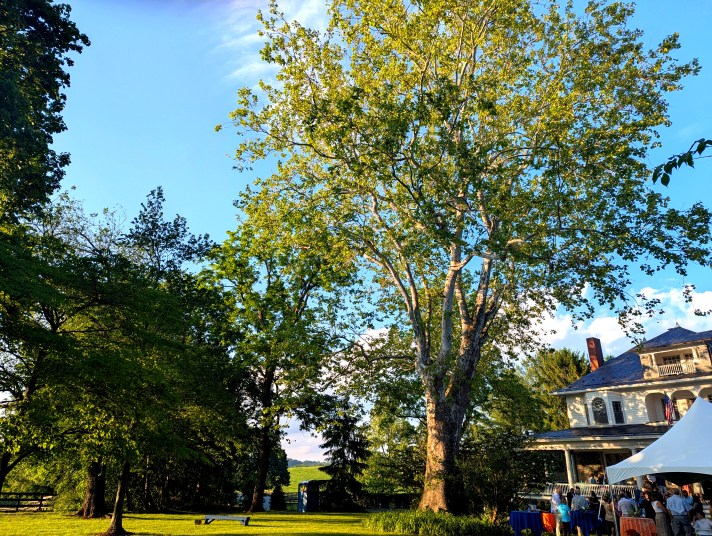
Last evening, during a lawn party at a horse farm northeast of Baltimore, I was taken with a huge, healthy sycamore. Awed, really. It was not as big as those Washington found in his surveys — not as big as others reported in Maryland — but definitely a survivor of several decades, probably a century or more, a descendant of the ancient giants, giving a glimpse of that long-gone world.
Maryland’s Forestry Service has a Big-Tree Program, curating reports of giants from around the state.
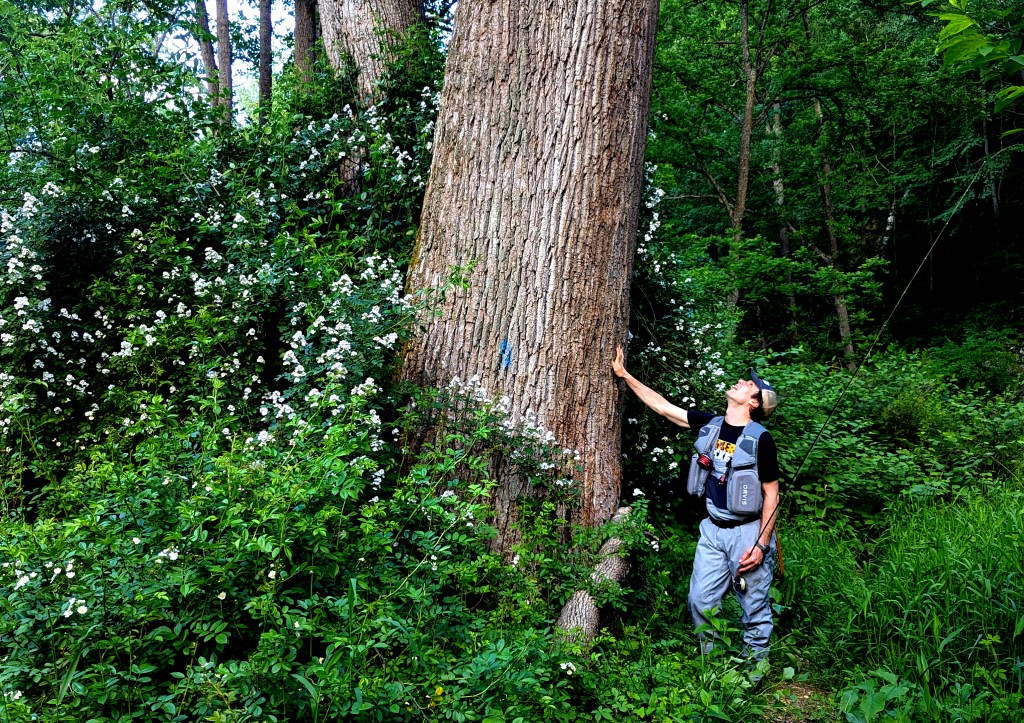
I took this photo of my son along the Gunpowder River a few days after writing this post. It’s a massive poplar in the Big Falls section of the river, near Hereford, Maryland.
Discover more from Dan Rodricks
Subscribe to get the latest posts sent to your email.

 Dan Rodricks
5/16/2025 Hey Dan: Just wanted to thank you for continuing to share your gift of writing. I especially appreciate your articles that observe nature and good human nature that offsets the complex world that is jammed with so much bad news. Your loyal fan and friend, Bonnie
LikeLiked by 1 person
This is a very interesting column, and the photos are great. Thanks, Dan
LikeLiked by 1 person