
We did not need the grownups to tell us that Duxbury was a rich town, though they always mentioned that fact when we thought about going there. Duxbury had the look of both old and new money — historic New England homes on clean, tree-lined streets, expertly trimmed hedges, painted fences and gates, quaint village shops, churches from colonial times and a harbor full of boats in summer. The first time someone pointed out a Mercedes-Benz to me, we were driving through Duxbury, on the South Shore of Massachusetts.
My little town, some 16 miles to the west, had ponds and small brooks; Duxbury had its own bay and a long spit of land called The Gurnet. Our town was landlocked, surrounded by other towns; Duxbury looked out on Cape Cod Bay and the Atlantic Ocean.
Though Duxbury seemed like an exclusive place, in those days a mother could drive her children there for a day on the beach or a father could take his boys for a few hours of fishing from the Powder Point Bridge.
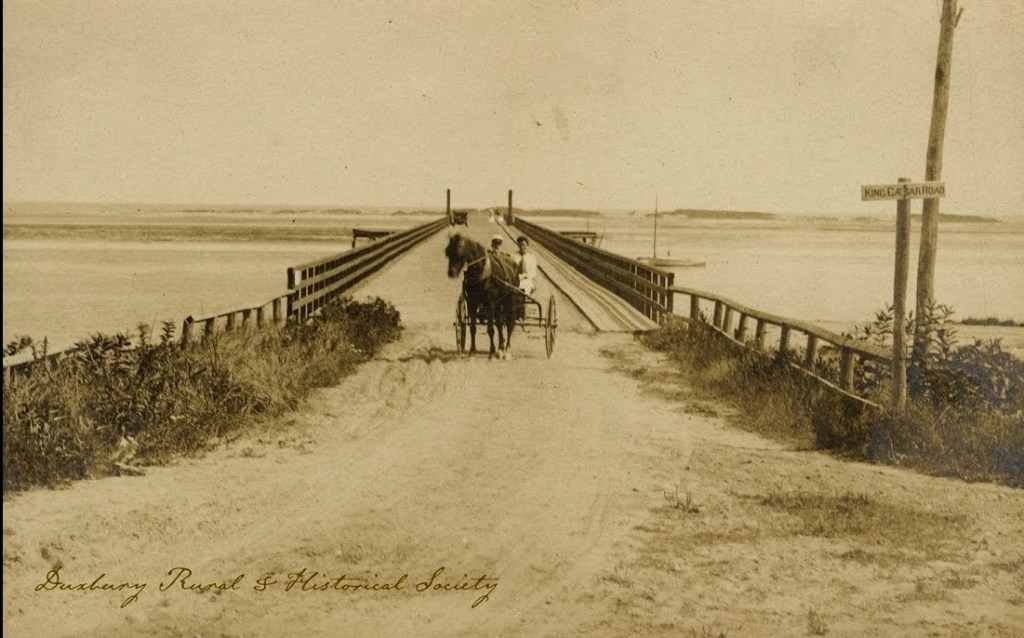
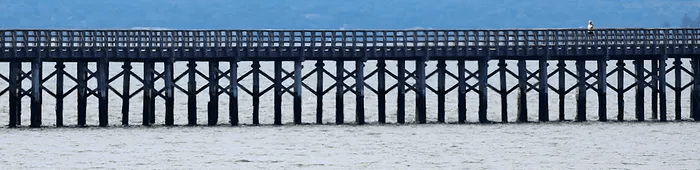
It was a wooden bridge of some 2,200 feet, built in the late 19th Century to connect the town with the Gurnet. It was a treat to go there and fish for flounder on the incoming tide, especially at night. Or sometimes we’d get there in morning fog that kept you from seeing the full length of the bridge. We’d fish for flounder as the rising sun burned off the fog.
My father, Joe, had little of what’s called disposable income, especially in the years after his small business burned to the ground. He and his partners struggled during the rebuilding of the business. My father also developed a chronic condition that made breathing difficult. His mother, widowed and poor, moved in with us. My mother took a minimum wage job. (In 1966, it was $1.25 an hour.)
Those were lean times. My father had friends who owned successful businesses and were climbing financially; he fell out of their orbit. In those years, he could not provide much for his two youngest boys — except for fishing. And we were OK with that. Fishing for flounder at Powder Point, in Duxbury, was an affordable adventure.
As Father’s Day approached, my brother and I might have pooled some dollars from snow shovelling or lawn mowing to buy him a card and a modest gift. But I don’t recall us ever making a fuss about Father’s Day — except for one year when my father announced that he’d like nothing better than a trip to Powder Point.
I was 11 or 12, my brother two years younger. The memory of this stands out because it was a Sunday on the cusp of summer, a busy day in Duxbury and at the bridge. My father, at the helm of his green Chrysler, was not happy about the traffic. But he got us there and found a parking space. We unloaded our bay rods, a box of sand worms, a tackle box and a galvanized, oblong tub. My brother and I each grabbed a handle of the tub and marched onto the bridge with the tub between us. My father took up the rear.
A lot of fathers, many of them immigrants like ours, had the same idea that day. It took us a while to find an open spot on the bridge over the fishing channel.
We had fished for flounder several times and knew how to do it without asking for help: Bait two hooks on swivels with pieces of sand worm and let the sinker take the rig to the bottom; be patient and pay attention to the tip of the rod. And that’s what we did while my father leaned against the railing of the bridge, enjoyed the scenery and the smell of the ocean.
We always caught flounder at Powder Point. I’m sure we brought home a few that long-ago Father’s Day. I don’t have photographic evidence, but I’m sure my father was pleased. He was happiest when we went fishing.
When you’re a kid, you’re not always aware of what people are going through — why, for instance, your fourth-grade teacher never seemed to smile, why that odd man in the trapper hat walked the streets of your town daily and never spoke to anyone, why a classmate wore the same clothes each day and always looked for leftovers in the cafeteria.
When you’re a kid, you see things and don’t understand them — why your father sometimes sat alone under a tree in the backyard and stared at his hands, why he would get weepy or erupt in anger at almost no provocation. But, with time comes clarity. The fog lifts. You can see the whole length of the bridge and your father standing happily against the rail above the fishing channel, incoming tide, the smell of ocean, his boys tending their lines.
Discover more from Dan Rodricks
Subscribe to get the latest posts sent to your email.

 Dan Rodricks
Outstanding article. It’s so reminds me of my life growing up. We didn’t go to powder point Bridge th
LikeLike
A Blessed Memory
LikeLiked by 1 person
Dear Dan,
Thank you for this beautiful piece. It evoked memories of my father. He served in the 3rd armored division during WW2 for 3 1/2 years; was wounded twice, helped liberate a concentration camp, saw numerous horrific battles, and came home (at 25!) a very different man. He worked 2 jobs to make ends meet. We lived in public housing for most of my childhood after living with my grandparents for 5+ years after the war due to a housing shortage & my father’s frequent unemployment. He had to quit a well-paying job due to a lung ailment he acquired at work and took a job he never liked in the post office. As a result of all this, he carried around a combination of anger, sadness, and bitterness his entire life. One of the only times he relaxed and seemed at peace was when he/we went fishing. The lines on his face smoothed out then and his smile was genuine. We fought a lot when I was an adolescent and a young man – about the Vietnam war and other matters. I remember the good times now, however, snd the important lessons he taught me. The last words he spoke was my name.
Happy Father’s Day.
Michael
LikeLiked by 2 people
Happy Father’s Day, Dan. And thanks for your gift to your readers: a lovely piece of a better time.
LikeLiked by 1 person
What good memories, Danny!
Mr. Rodrick’s was a formidable man!
God bless him!
LikeLiked by 1 person