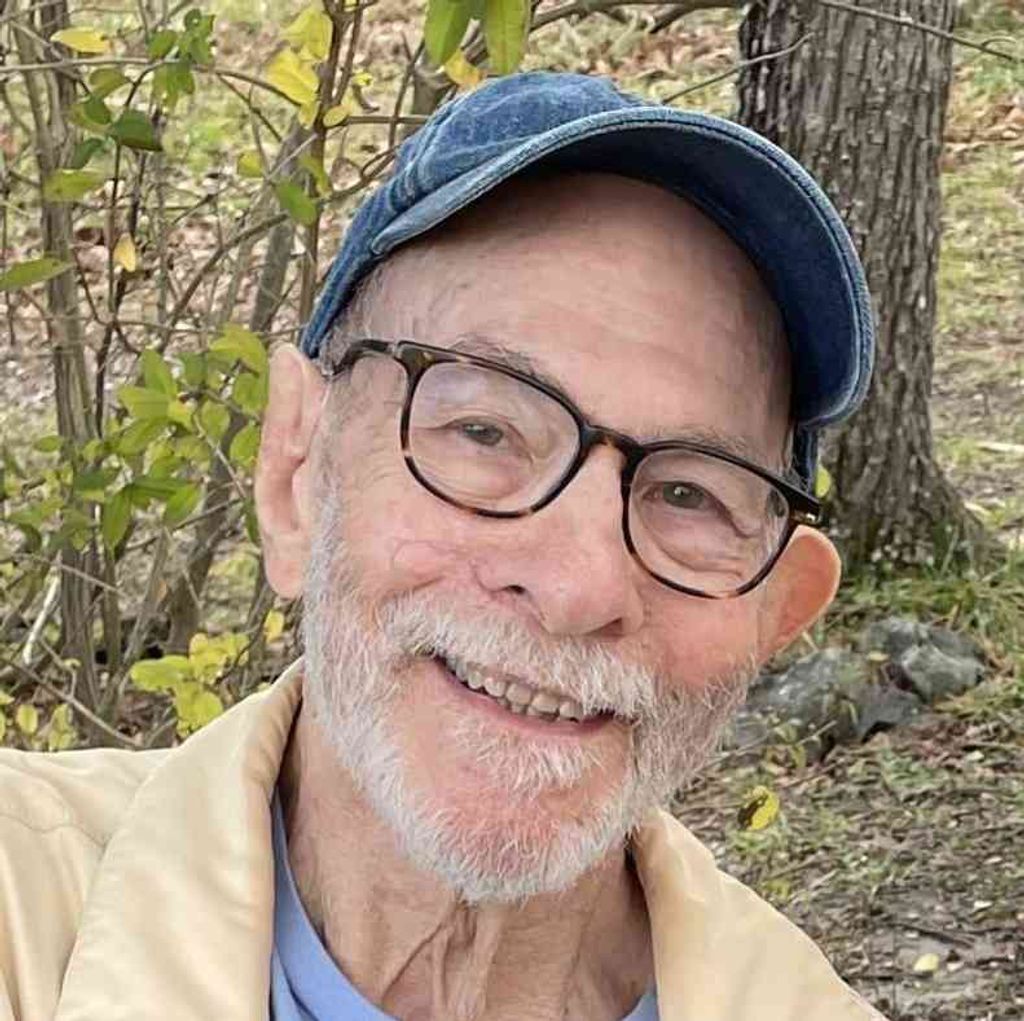
Anya Webb informed me of the death on February 9th of her stepfather, Michael Lang. He was 83, and one of many memorable people I had the pleasure of meeting during my time as a columnist for The Baltimore Sun. I admired Mike Lang for his courage, his resilience and his skill with a camera, and I identified with his curiosity about people and the places where they lived, worked and play in Baltimore.
What follows is the second column I wrote about him. It was published in September 2020, during the pandemic. I think this is the best way to present him to you.
A Baltimore boyhood memory of polio and a pool hall
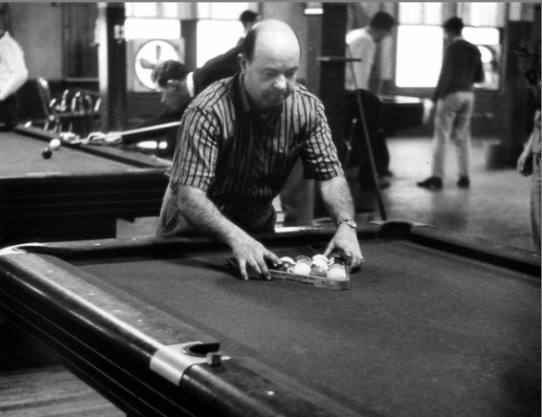
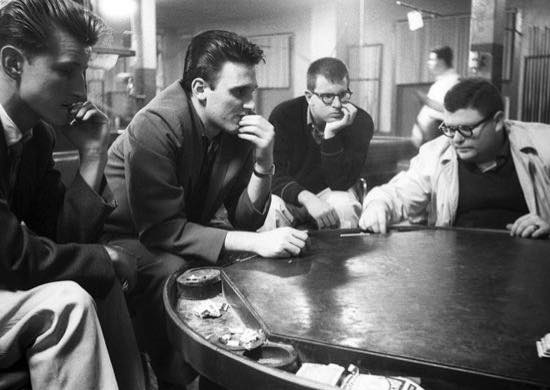
In February 1995, when I first spoke with Michael Lang about his photographs of bygone Baltimore, he mentioned polio, but did not dwell on it, nor did I explore the subject because that was not the reason I had contacted him. I was interested in some cool photographs he had taken inside a Baltimore pool hall in the 1950s; they were arresting images that reminded me of scenes from an Elia Kazan film.
Or maybe a collaboration of Elia Kazan and Barry Levinson.
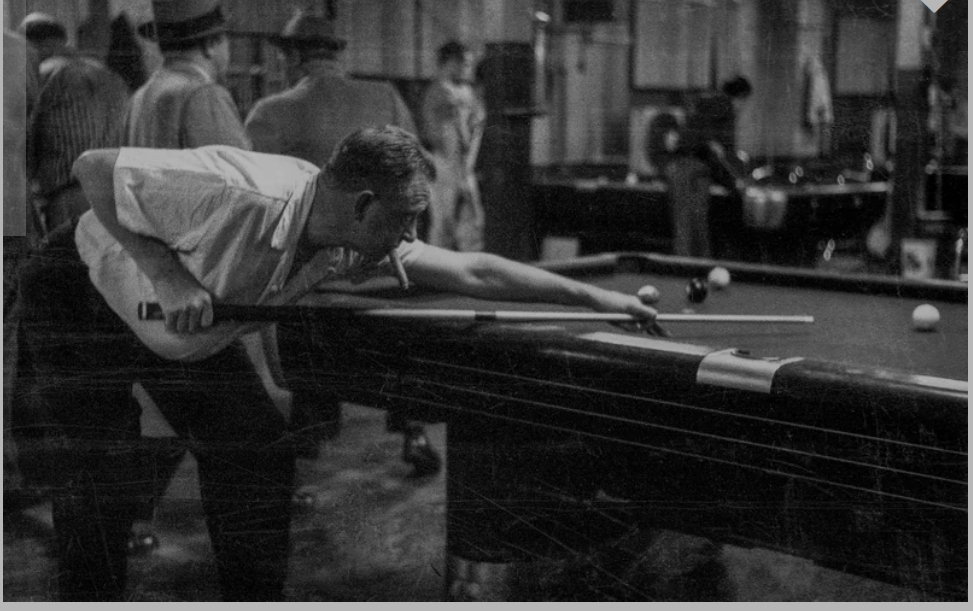
They were photos of young guys who frequented Belvedere Billiards in northwest Baltimore. The place was better known as Benny’s because a guy named Benny Kitts ran it. There were pool tables, card tables and pinball machines. And Mike Lang’s photographs, taken in 1957 on a Leica IIIC, brought it all to life.
The guys in the black-and-white photos evoked Sal Mineo and James Dean. One fellow sported a Sinatra-style fedora and puffed a cigar. There were guys in skinny ties and sport coats, guys in nice cardigans, guys bending over pool cues, hovering over cards, banging away at Benny’s pinball machines.
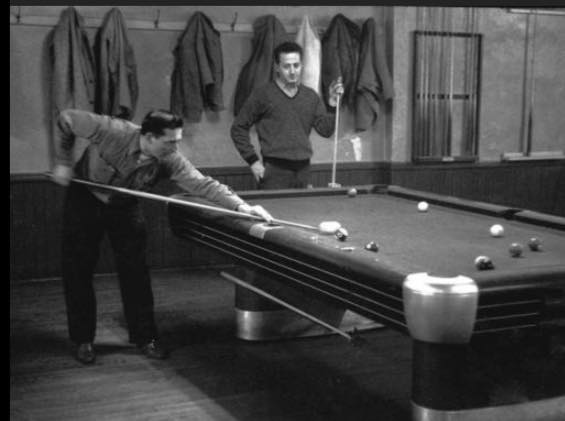
Maybe the youngest guy in the place was Mike Lang, who walked with a crutch. He had picked up photography as a teenager, wandered into Benny’s and started taking pictures. The older guys didn’t give him a hard time, either. In fact, they seem to have liked the attention.
In 1995, when I first wrote about the scenes from Benny’s, I made only one reference to polio: “Lang, who was born in 1942, had contracted polio when he was 7. He took up photography as a way of getting in touch with the world.”
Of course, in 1995, we did not have a pandemic. Here we are in the middle of one in 2020, with more than 200,000 Americans dead and a president crowing that he did a great job managing the public health crisis.
Mike Lang is now 78, a retired scientist who had a long career as a researcher at the National Institutes of Health. He contacted me recently to say he had produced a self-published book of the photos from Benny’s.
This time, I decided to ask about the polio.
“I got it five years before the vaccine,” Lang said, referring to the polio vaccine developed by Dr. Jonas Salk in the mid-1950s after an extensive clinical trial. The vaccine made Salk a national hero because, by the middle of the 20th Century, polio was every parent’s nightmare. The virus attacked the nervous systems of children and caused paralysis. It confined thousands to tank respirators known as iron lungs. In 1952, there were 57,879 cases, the worst year in U.S. history. Some 3,145 victims died that year and 20,000 were left disabled.
By then, Mike Lang had been losing the function of his right leg. His parents took him first to Sinai Hospital and then to Kernan Hospital for treatments. He was placed in a ward full of boys with polio. There was a separate ward for girls and, in those days of segregation, separate wards for Black children.
Lang spent six months at Kernan, and his treatments involved spinal taps and operations. “At one point I was told I was going to be put into an iron lung, but I apparently recovered enough that I didn’t have to,” he says.
Still, his right leg became paralyzed. After a couple of years at home, he required hospitalization again, the second time for three months. There was a period, he says, when WBAL Radio selected him to profile in broadcasts. The station used his story to help raise funds for polio research under the banner, “For The Love of Mike.” He was a radio poster child.
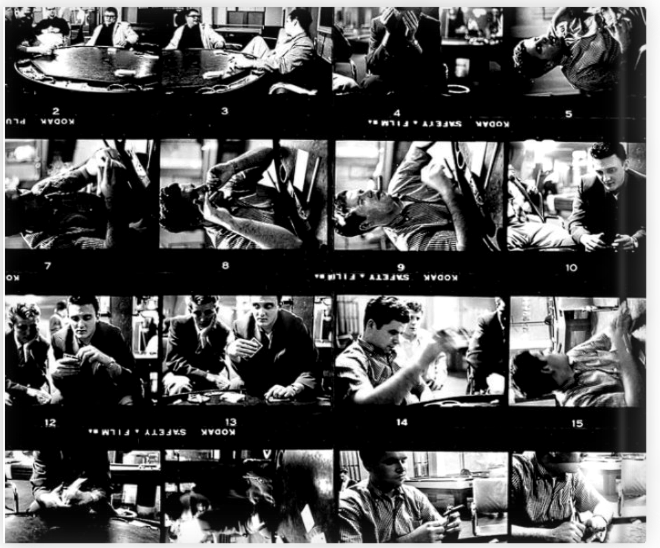
Lang eventually went home with a brace on his leg. He learned to get around with one crutch. He picked up the camera and, as a curious teenager, started venturing out and taking photographs of his hometown. His portfolio includes scenes from workaday Baltimore and the streets near the old wholesale fish market; he has photos from the 1950s of children, Black and white, and produce vendors. His travels took him into Benny’s, where he became fascinated with the faces of men at play — pool, pinball and cards.
After graduating from City College, Lang packed away his camera and got busy with education and a career. He went to college, eventually earning a doctorate in biophysics. He became a researcher at Harvard Medical School and had a stint as an associate professor at Boston University. He traveled across the country, to Asia and to Israel, and spent nearly three decades at NIH.
As the years went by, polio continued to take its toll, eventually robbing him of the use of his left leg.
Because Lang is a retired government scientist, I did not miss asking him about the Trump administration’s response to the coronavirus. He’s appalled, as you might expect, and specifically by the refusal of way too many Americans, starting with the president, to simply wear a face mask everywhere in public.
“It’s your right not to wear a face mask?” he asks sardonically. “So are you going to go into surgery without the surgeon wearing a mask? Is it his right not to wear one? It is difficult for me to understand, why more people don’t appreciate the seriousness of this pandemic.”
Discover more from Dan Rodricks
Subscribe to get the latest posts sent to your email.


Dan.
once again a great article…BUT…more pictures, please ! These have a quality of greatness in simplicity, composition and of a “articular moment”.
thanks for your column. Edward Haladay
LikeLike
Just click on the links imbedded in the post.
LikeLike
#RIP Mr. Lang. He sounds like he was a truly interesting individual, and one who attempted to help othersas well. So many of the same era who contracted polio before vaccines. We made such progress, all to now see it thrown away. A true crime against humanity.
LikeLiked by 1 person