
I did not think this would happen: The Appellate Court of Maryland has stood up for the mighty, old hemlocks and pines of Swallow Falls State Park in Western Maryland.
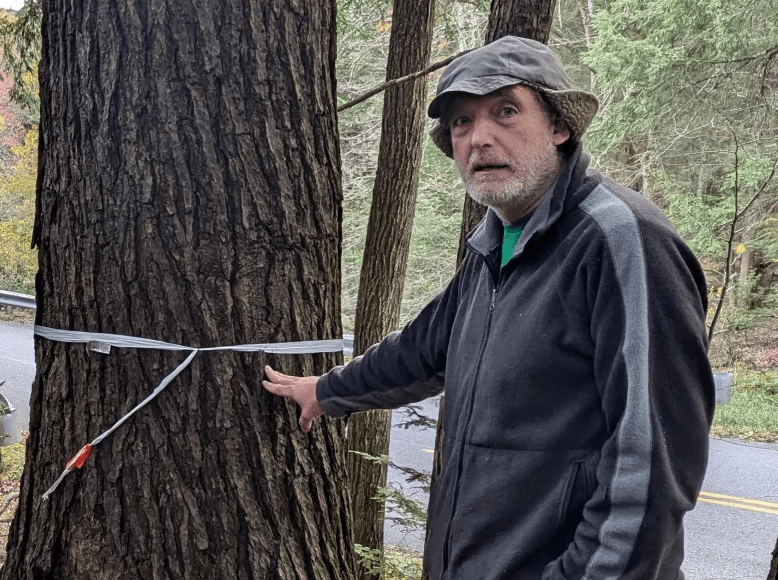
Readers of my Sun column in 2024 and this blog in 2025 might recall the fight to save the trees, led by Steve Storck (pictured above) and attorney Dirk Schwenk. Joan Maloof, founder of the Old Growth Forest Network, also joined the fight.
They challenged a plan by Garrett County officials to cut a swath through protected forest to replace a steel, single-lane bridge over the Youghiogheny River, near the park entrance, with a much wider parallel span. Instead of fixing the old bridge, the county wanted a new one. And it asked the state to keep the old bridge open while crews build the new one.
The scope of the project was alarming. The county wanted the new bridge to have two lanes, a sidewalk and a bike lane.
At one point during its review of the plan, the Maryland Department of Environment noted that “the width of the limit of the disturbance is three times as wide as the existing roadway.”
The MDE assessment added this: “It is critical to consider that the Swallow Falls bridge and associated roadway are located within pristine parkland and surrounded by sensitive natural resources including highly erodible soils, hemlock, and woodland species of particular interest which should be protected.”
Still, in 2023, Maryland’s natural resources secretary, Josh Kurtz, granted a conditional exception to the stringent restrictions on development described in the Scenic and Wild Rivers Act of 1968, paving the way for a new bridge and dooming potentially hundreds of trees.
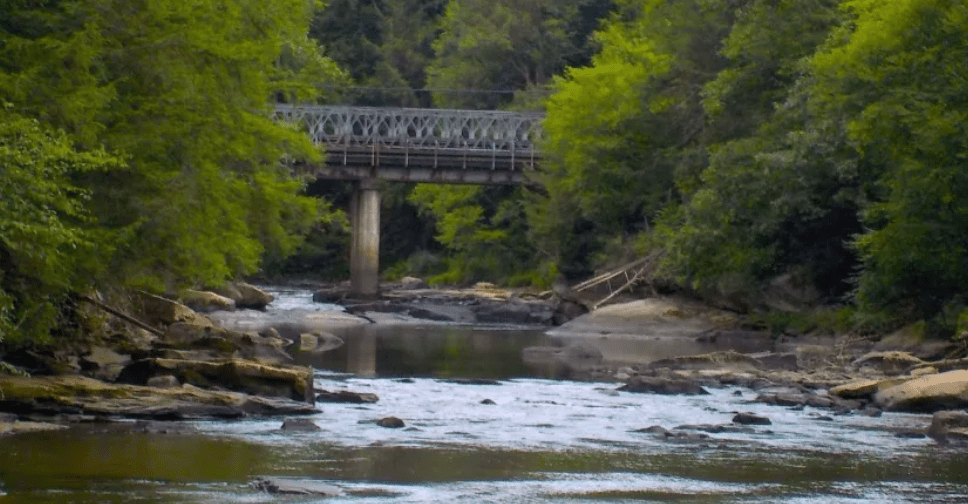
Ribbons went on hemlocks and pines slated for removal, visible from Swallow Falls Road on either side of the bridge. It was a depressing sight.
Stork, a nearby landowner, and other opponents of the county’s plan challenged it in the Garrett County Circuit Court.
But, in April 2024, a judge in Oakland dismissed the challenge and affirmed the state’s action.
That was not the end of the fight, however.
Schwenk, working pro bono as a volunteer with the Chesapeake Legal Alliance, appealed the court’s decision, arguing that the Maryland Department of Natural Resources should not have granted an exception to the state laws that protect the hemlocks, some of the largest and oldest in the state.
To my surprise, and that of others, the plaintiffs won.
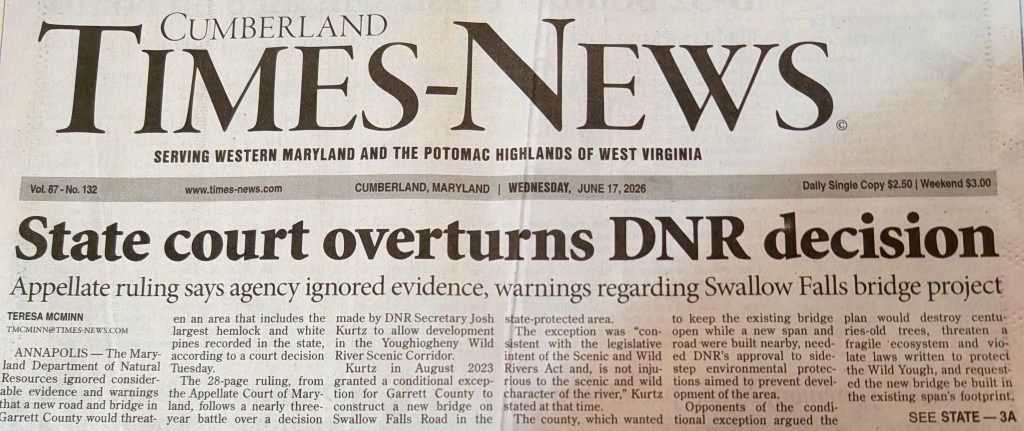
In a ruling issued on Tuesday, June 16, the appeals court said the DNR erred when it approved the removal of trees near the park’s entrance for the construction of the new bridge.
“We hold that the Department’s exception decision does not comply with the requirement of adequate findings and conclusions,” the court said. “We also conclude that the Department’s decision is arbitrary, capricious and unsupported by substantial evidence based on the record as a whole. Given this, we vacate the circuit court’s order and direct the court to remand this matter to the Department of Natural Resources for a renewed and thorough examination of the County’s application for an exception.”
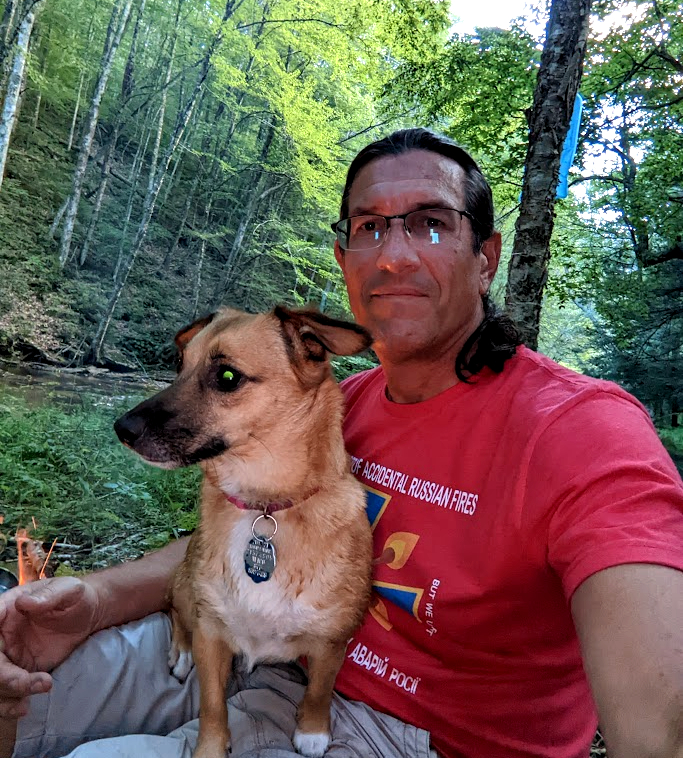
Schwenk, of course, was pleased.
“The win vindicates what the petitioners said all along,” he says. “If the DNR did the review that it was supposed to do, it would replace the bridge in its current location instead of authorizing clear cutting of old growth hemlocks right along the banks of the river.”
Schwenk points out that DNR also ignored a relatively new law that designated certain areas of the state as “irreplaceable.” That includes Swallow Falls.
“One of the DNR’s most unsupported claims was that a new bridge and new road in a different location was a ‘continuation of an existing use,’” says Schwenk. “By making that claim, the DNR tried to avoid the fact that the entire area was designated an Irreplaceable Natural Area in which all development was banned.”
The Appellate Court said “the only ‘continuation of an existing use’ [would be] a replacement bridge on the existing site.”
To accomplish that, a road closure would be required — a complaint registered by Garrett County officials, who said public safety would be at risk if emergency vehicles had to take a detour to get into the popular park during construction.
Storck disagreed and called the raising of those concerns “false fear tactics.”
“I am not interested in putting my community at risk and did the research to ensure my request to replace the bridge in its current [location] did not do this,” he told me. “I have never argued against replacing the bridge. It is the location and the undermining of environmental protections that are the issues for me.”
Storck, a champion of the river and forest, has put a lot of time into saving the trees along the Youghiogheny. He’s also been researching wildlife in Swallow Falls. Using echolocation software, he recently identified two types of bats on the federal endangered species list and one, the little brown bat, on a global endangered list.
Sounds like another argument — in case it’s needed — against cutting down the mighty, old hemlocks and pines of Swallow Falls.
MORE COMMENTARY ON SUBSTACK AND BALTIMORE FISHBOWL
Discover more from Dan Rodricks
Subscribe to get the latest posts sent to your email.


I’m so glad they are protecting those trees. Swallow falls is such a beautiful place and needs to be preserved .
[John Koch – Koch Ins Agency Agency Principal T: 410-931-1400 (Call or Text) 2103 Belair Rd Fallston, MD 21047] [cid:image002.png@01DCFF03.DCC11B60]https://www.signasource.com/esig/link-246499.php [cid:image003.png@01DCFF03.DCC11B60]https://www.signasource.com/esig/link-246501.php [cid:image004.png@01DCFF03.DCC11B60]https://www.signasource.com/esig/link-246502.php [cid:image005.png@01DCFF03.DCC11B60]https://www.signasource.com/esig/link-246503.php [cid:image006.png@01DCFF03.DCC11B60]https://www.signasource.com/esig/link-246504.php [cid:image007.png@01DCFF03.DCC11B60]https://www.signasource.com/esig/link-246505.php
LikeLiked by 1 person
A wonderful ‘feel good’ story on a day when we need such stories! Thank you
Sue Talbott
LikeLiked by 1 person
Great news. Love Swallow Falls. Congratulations to all who fought for this. Judy’s IPhoneOn Jun 18, 2026,
LikeLiked by 1 person
Thanks, Dan. Nancy
LikeLike